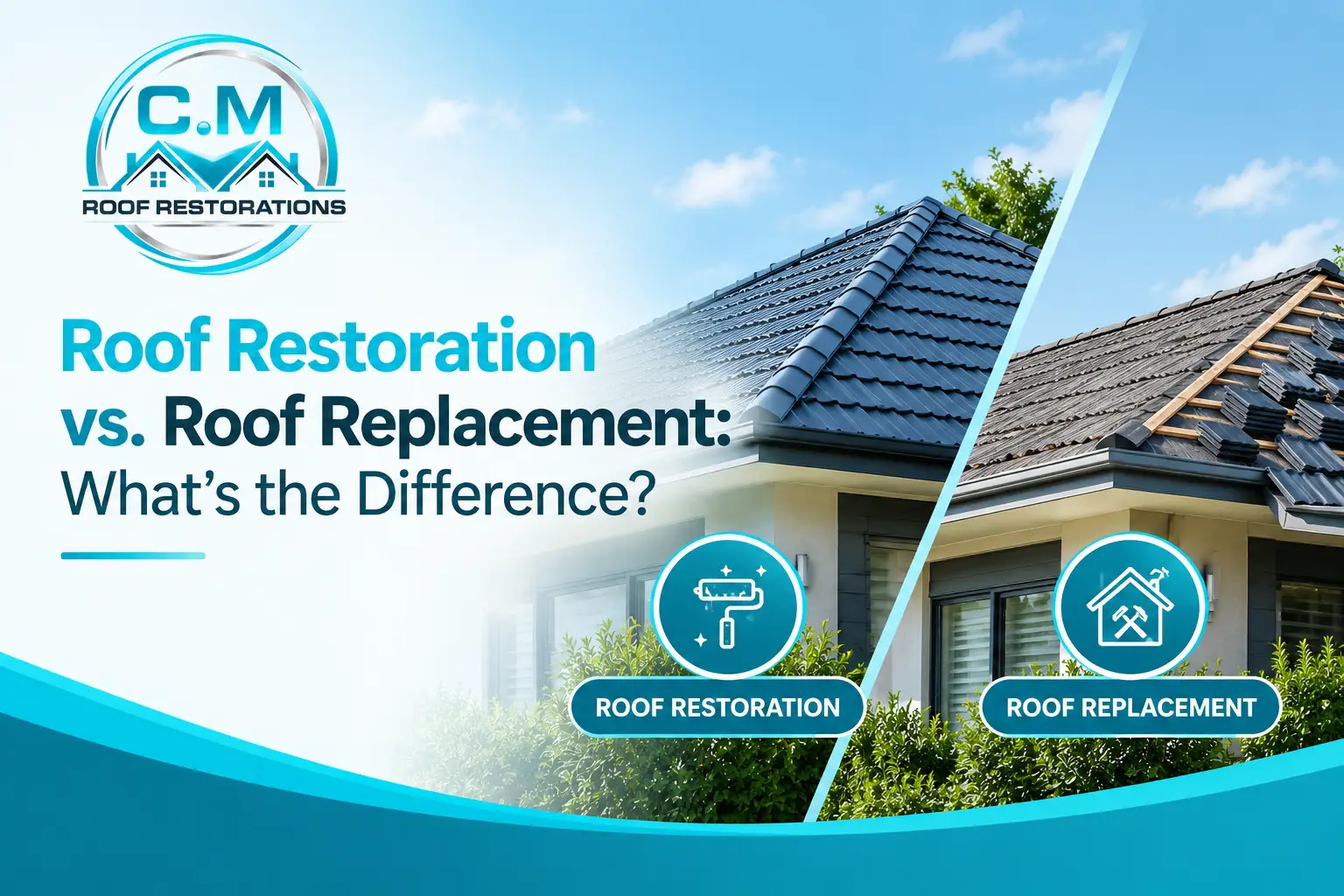
Roof restoration and roof replacement solve different roofing problems. Roof restoration repairs, cleans, prepares, and recoats an existing roof when the underlying system remains suitable for continued use. Roof replacement removes the existing roof and installs new roofing materials, making replacement appropriate when widespread deterioration or structural problems make restoration unsuitable.
For Adelaide homeowners, the decision should depend on roof condition, material, age, repair history, structural integrity, and long-term plans rather than appearance alone. C.M Roof Restorations can assess your Adelaide roof before you choose a solution. A roof inspection can establish whether restoration can provide sufficient service life or whether replacement offers better value.
What Is Roof Restoration?
Roof restoration is a comprehensive process that renews an existing roof without completely removing the roofing system. The work can include cleaning, replacing damaged tiles or sheets, repairing flashings, repointing ridge caps, treating corrosion, resealing vulnerable areas, priming, and recoating.
A tiled roof may need broken tile replacement, ridge cap repointing, and protective coating. A metal roof may need rust treatment, fastener replacement, sealing, and compatible coating. The exact scope depends on the roof assessment.
Restoration works best when the roof remains structurally sound, and defects affect limited areas. Restoration cannot correct severe timber rot, major structural weakness, or widespread roof covering failure.
What Is Roof Replacement?
Roof replacement removes the existing roof covering and installs a new roofing system. Depending on the property, replacement can involve new tiles or metal sheets, flashings, battens, sarking, gutters, insulation, and repairs to supporting components.
Replacement addresses problems that extend beyond surface deterioration. A roof with widespread leaks, severe corrosion, significant timber damage, persistent structural movement, or extensive storm damage may require complete replacement.
Replacement also gives you an opportunity to change roofing materials. For example, an ageing tiled roof can be replaced with modern metal roofing when the property and design requirements make the change suitable.
Roof Restoration vs Roof Replacement: Key Difference
The key difference is the extent of work. Roof restoration preserves the existing roof system, while roof replacement removes the old system and installs a new one.
Restoration focuses on extending useful service life through repairs and surface renewal. Replacement creates a new roof and can address concealed defects that restoration cannot reach.
| Factor | Roof Restoration | Roof Replacement |
| Main purpose | Renew an existing roof | Install a new roof |
| Existing covering | Mostly retained | Removed |
| Repairs | Localised to moderate | Extensive or structural |
| Upfront cost | Generally lower | Generally higher |
| Waste | Lower | Higher |
| Project duration | Usually shorter | Usually longer |
| Best application | Sound roofs with manageable deterioration | Failed, severely aged, or structurally compromised roofs |
When Is Roof Restoration the Better Option?
Roof restoration is the better option when the roof structure remains sound, and the main problems involve surface deterioration, limited damage, or ageing protective finishes.
A restoration may suit a tiled roof with faded coating, isolated broken tiles, deteriorated ridge pointing, minor leaks, or surface growth. A metal roof may suit restoration when corrosion remains manageable, and the sheets retain sufficient structural integrity.
Restoration can extend the useful life of a suitable roof while avoiding the cost and disruption associated with complete replacement. The result depends heavily on preparation, repair quality, compatible materials, and correct application of protective coatings.
Signs a Roof May Suit Restoration
Look for these conditions:
- The roof remains structurally stable.
- Damage affects limited areas.
- Most tiles or sheets remain serviceable.
- Leaks have identifiable repairable causes.
- Ridge caps need repointing rather than complete rebuilding.
- Metal surfaces have manageable corrosion rather than widespread perforation.
- Previous repairs have not become a recurring pattern.
When Is Roof Replacement Necessary?
Roof replacement becomes necessary when the existing roof has widespread failure, significant structural deterioration, or damage that restoration cannot reliably correct.
Repeated leaks across different roof areas can indicate a broader failure. Sagging roof lines can indicate structural weakness. Extensive rust, perforated metal sheets, rotten battens, severely damaged tiles, or substantial storm damage can make replacement more appropriate.
Roof replacement may also make sense when ongoing repair costs approach the cost of installing a new roof. Spending repeatedly on isolated defects can provide limited long-term value when the underlying system continues to deteriorate.
Signs a Roof Needs Replacement
Common warning signs include:
- Widespread active leaks.
- Persistent moisture inside the roof space.
- Significant timber rot.
- Severe corrosion or perforation.
- Extensive tile breakage or deterioration.
- Repeated repair requirements.
- Noticeable roof sagging.
- Major storm damage.
- Roofing materials that have reached the end of their serviceable life.
Asbestos roofing requires additional care because removal and disposal involve specific safety and regulatory requirements. Do not disturb asbestos roofing through DIY work; obtain professional advice about safe management or replacement.
Roof Restoration and Roof Replacement Costs
Roof restoration generally costs less than roof replacement because restoration retains most of the existing roofing system. Adelaide restoration projects commonly fall around $3,500 to $9,000, with many standard homes costing approximately $4,000 to $8,000. Larger or complex roofs can exceed $12,000.
Roof replacement commonly costs substantially more because the contractor must remove existing materials, dispose of waste, supply new roofing products, and complete a larger installation. Adelaide replacement projects can range from approximately $15,000 to $45,000 or more, depending on roof size, material, access, structural repairs, and design.
These figures are budgeting ranges rather than fixed prices. Roof pitch, roof condition, material availability, access, solar panels, heritage details, and required safety measures can change the final quote.
Compare each option against expected service life, maintenance, structural condition, and future repair requirements.
How Long Does Roof Restoration Last?
A roof restoration can extend a suitable roof’s useful life by about 5 to 15 years, depending on condition, materials, preparation, climate, and maintenance.
Restoration does not create a completely new roof structure. The original tiles, sheets, battens, and other components remain part of the system unless specific components are replaced.
Adelaide weather exposes roofs to strong ultraviolet (UV) radiation, heat, rain, wind, and seasonal temperature changes. Coastal properties can experience additional salt-air exposure, which makes corrosion control particularly important for metal roofing.
Regular roof maintenance, prompt repairs, and periodic inspections can help protect the restored surface and identify developing defects before damage spreads.
How Long Does Roof Replacement Last?
A roof replacement provides a substantially longer service period because the existing roof covering is replaced with new materials. The actual lifespan depends on the roofing material, installation quality, environment, maintenance, and product specifications.
New metal roofing can provide decades of service when correctly selected, installed, and maintained. Tile roofing can also provide a long service life when the underlying structure and installation remain sound.
Replacement can make financial sense for an older roof that requires frequent repairs. A new system can address underlying construction problems during installation.
What Does Roof Restoration Include?
A complete restoration should address both visible deterioration and the causes of preventable roof problems. Typical work can include:
- Roof inspection and condition assessment.
- Removal of dirt, moss, lichen, and surface residue.
- Replacement of cracked or broken tiles or damaged sections.
- Ridge cap re-bedding and repointing where required.
- Flashing repairs and sealing around penetrations.
- Rust treatment and preparation for metal roofing.
- Primer or sealer application where specified.
- Protective roof coating or membrane application.
The written quotation should identify labour, materials, repairs, preparation, waste removal, and workmanship warranty.
What Does Roof Replacement Include?
Professional roof restoration services can address damaged tiles, deteriorated bedding, failed pointing, surface wear, and drainage-related issues as part of a broader restoration plan.
The project may include new tiles or metal sheets, battens, sarking, flashings, ridge components, gutters, insulation, ventilation products, and other associated materials. The exact scope depends on the selected roofing system and the condition of the existing roof.
Replacement provides an opportunity to correct drainage problems, improve detailing around penetrations, address structural defects, and select materials that suit Adelaide’s climate and the property’s requirements.
How Adelaide Weather Affects the Decision
Adelaide roofs face intense UV exposure, hot summer conditions, winter rainfall, strong winds, and occasional severe storms. Coastal properties can face additional salt exposure and accelerated corrosion.
These conditions affect restoration and replacement decisions. Early metal corrosion may suit rust treatment, preparation, and recoating, while perforated metal requires replacement because coating cannot restore missing material.
Tile roofs can develop cracked tiles, deteriorated mortar, ridge cap movement, and moisture penetration. Repairs and repointing suit limited defects, while widespread failure can justify replacement.
Should You Repair, Restore, or Replace?
Choose repair when the roof has an isolated defect, restoration when several manageable defects affect an otherwise sound roof, and replacement when widespread or structural failure makes restoration unreliable.
A small number of broken tiles does not automatically justify restoration. Likewise, faded coating alone does not justify replacement. The appropriate scope should match the actual condition.
If a roof has several ageing components but the structure remains sound, combining repairs with restoration can address multiple issues during one project. If the roof requires extensive structural work, replacement may provide a more reliable long-term result.
How to Compare Roofing Quotes
Before choosing a contractor, compare the scope of work, materials, warranty, preparation, and cleanup offered by experienced roofing contractors in Adelaide.
Ask whether the contractor has included tile replacement, ridge cap repointing, flashing repairs, rust treatment, and surface preparation. Confirm how additional defects are charged.
Check licensing and insurance, review relevant experience, and ask for clear workmanship warranty terms.
Final Decision: Restoration or Replacement?
Restore the roof when the existing system remains structurally sound and manageable repairs can provide useful additional service life. Replace the roof when structural weakness, widespread damage, severe corrosion, repeated failures, or end-of-life materials make restoration unreliable.
Roof restoration usually offers lower upfront cost, less waste, shorter disruption, and a practical way to renew a serviceable roof. Roof replacement costs more but provides new roofing materials and an opportunity to correct deeper defects.
A professional roof inspection remains the most reliable starting point. The assessment should consider material, condition, age, repair history, moisture, structure, access, weather exposure, and your property plans.
Frequently Asked Questions
What is the difference between roof restoration and roof replacement?
Roof restoration repairs and renews an existing roof, while roof replacement removes the old roofing system and installs new materials. Restoration suits structurally sound roofs with manageable deterioration, while replacement suits roofs with widespread damage, structural weakness, severe corrosion, or end-of-life materials.
Is roof restoration cheaper than roof replacement?
Yes, roof restoration is generally cheaper than roof replacement because most existing roofing materials remain in place. Restoration avoids complete removal, disposal, and new installation costs, although extensive repairs, difficult access, or severe deterioration can raise restoration costs substantially.
When should you restore a roof instead of replacing it?
Restore a roof when the structure remains sound, and damage is limited to repairable tiles, ridge caps, coatings, flashings, or manageable corrosion. Restoration provides practical value when the existing roof can deliver additional service life without repeated major repairs or structural intervention.
How long does a roof restoration last compared with a roof replacement?
A suitable roof restoration can commonly extend useful service life by about 5 to 15 years, while a new roof can provide decades of service. Actual longevity depends on materials, installation quality, climate exposure, maintenance, and the condition of underlying components.
What are the signs that a roof needs replacement rather than restoration?
Widespread leaks, significant timber rot, severe corrosion, perforated metal, major storm damage, persistent sagging, extensive tile failure, and repeated repairs indicate potential replacement. These conditions can extend beyond what cleaning, repointing, repairs, sealing, and recoating can reliably correct.
Does roof restoration increase the value of a home?
Roof restoration can improve a home’s presentation and marketability when the existing roof remains serviceable. A well-maintained roof can reduce visible defects, address maintenance concerns, and support buyer confidence, but the effect on property value varies according to location, condition, market demand, and project quality.