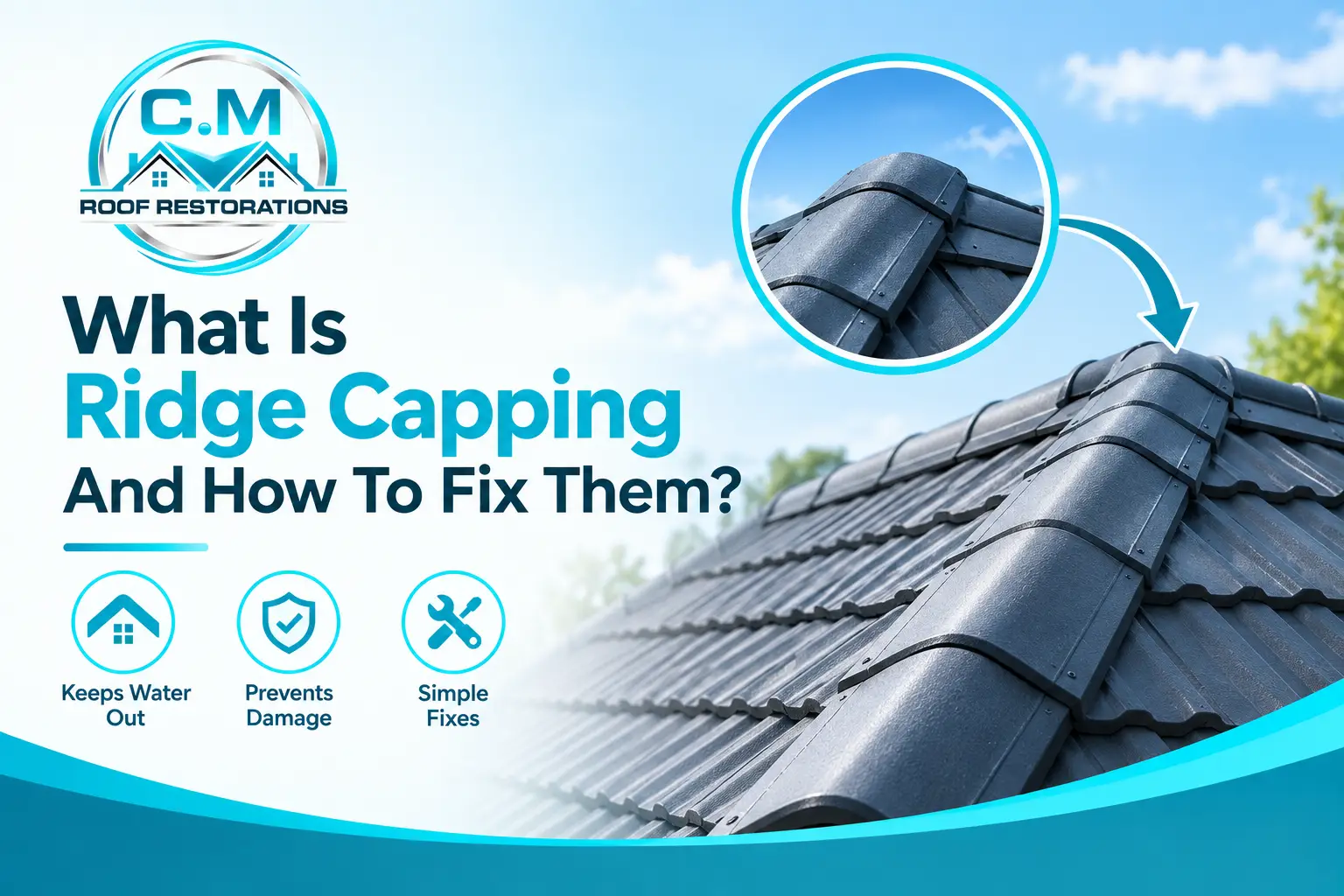
Ridge capping is the protective covering installed along the highest point of a pitched roof, where two sloping roof surfaces meet. On tiled roofs, ridge capping usually consists of shaped concrete or terracotta ridge tiles secured with bedding and finished with pointing. The ridge protects one of the roof’s most exposed areas from rainwater, wind, debris, and pest entry. When ridge caps crack, loosen, shift, or lose their mortar, water can enter the roof system and cause damage. Understanding what ridge capping does, why it fails, and how professionals repair it helps you identify problems before a minor defect becomes a costly roof repair.
What Is Ridge Capping?
Ridge capping is a row of specially shaped roofing pieces that covers and seals the ridge, which is the horizontal peak where two sloping sides of a roof meet. Tiled roofs commonly use curved or angular concrete and terracotta ridge tiles, while metal roofing uses purpose-made metal ridge caps.
On a traditional tiled roof, installers place ridge caps over a bedding layer, then seal the exposed joints with pointing. Modern restoration work commonly uses flexible pointing compounds because roof materials experience movement from temperature changes and weather exposure. The ridge capping installation process must create a secure, weather-resistant finish without obstructing any designed roof ventilation.
Ridge capping can appear simple from ground level, but the ridge performs an important protective function. The highest roof line receives direct exposure to rain and wind, so gaps around damaged caps can provide an entry point for water. Correctly installed ridge capping helps maintain the roof structure and protects the areas beneath the roof covering.
Why Is Ridge Capping Important?
Ridge capping seals the roof’s highest exposed joint and helps prevent water, wind, debris, and pests from entering the roof space. Ridge caps can help secure the upper edges of roof coverings while providing a finished transition between sloping roof surfaces.
Effective ridge capping supports several parts of roof performance:
- Water protection: properly sealed ridge joints reduce pathways for rainwater and wind-driven moisture.
- Roof security: sound bedding and pointing help keep ridge tiles stable during strong winds.
- Debris control: sealed gaps reduce entry points for leaves, twigs, and other debris.
- Pest prevention: intact ridge capping helps restrict access for birds and rodents.
- Roof appearance: aligned, intact ridge tiles create a consistent finished roof line.
- Ventilation compatibility: ridge capping can work with a designed ridge ventilation system while keeping weather outside.
A damaged ridge does not automatically mean the entire roof has failed. The required response depends on the condition of the ridge tiles, bedding, pointing, surrounding tiles, and wider roof structure.
What Causes Ridge Capping Damage?
Age, weather exposure, roof movement, and failed previous work are common causes of ridge capping deterioration. Different materials fail at different rates, but repeated exposure gradually affects mortar, pointing, bedding, and ridge tiles.
Five common causes deserve attention:
- Age: Traditional cement mortar becomes brittle as it ages. Cracks can widen, sections can crumble, and ridge tiles can lose support.
- Temperature changes: Roof materials expand and contract as temperatures change. Repeated movement can contribute to cracks in rigid bedding and pointing.
- Rain and wind: Heavy rain can enter existing gaps, while strong winds can place additional pressure on loose ridge caps.
- Poor installation: Incorrect bedding, insufficient fixing, poor alignment, or unsuitable pointing can shorten the service life of ridge capping.
- Roof movement or impact: Movement within supporting components, falling branches, or other impacts can shift or damage ridge tiles.
A surface crack does not always identify the underlying cause. A professional inspection can determine whether the defect affects only the pointing or extends into the bedding, ridge tiles, or surrounding roofing.
What Are the Signs of Damaged Ridge Capping?
Cracked mortar, loose ridge tiles, deteriorated pointing, visible gaps, and water stains are key warning signs that ridge capping needs inspection. You can check the ridge visually from a safe position without climbing onto the roof.
Look for:
- Cracks or missing sections in mortar
- Ridge tiles that appear displaced or uneven
- Crumbling or separated pointing
- Visible gaps beneath or between ridge caps
- Water stains or damp areas inside the home after rain
- Roof debris around areas where ridge tiles have moved
- Broken ridge tiles visible from ground level
A ceiling stain does not prove that ridge capping caused a leak because water can travel beneath roofing materials before appearing inside the home. A roofer needs to trace the likely entry point and inspect related roof components.
Can Ridge Capping Be Repaired Without Replacing the Roof?
Yes, damaged ridge capping can often be repaired without replacing the entire roof when the surrounding roof remains structurally sound. A targeted repair may involve repointing, rebedding, replacing individual ridge tiles, or correcting related defects.
A roofer first assesses the condition of the ridge and surrounding roof covering. If the ridge tiles remain usable but the exposed pointing has failed, repointing may solve the problem. If the bedding beneath the ridge tiles has deteriorated, rebedding and repointing provide a more complete repair.
Extensive deterioration can require ridge capping replacement or broader roof restoration. The decision should follow an inspection rather than the appearance of one cracked section.
What Is the Difference Between Repointing and Rebedding?
Repointing repairs the exposed seal around ridge tiles, while rebedding removes and reinstalls ridge tiles on new bedding material. The two procedures address different levels of ridge deterioration and may be completed together.
Repointing generally suits a ridge where the underlying bedding remains secure, but the exposed pointing has cracked, separated, or deteriorated. The roofer removes failed material, prepares the joint, and applies suitable flexible pointing.
Rebedding becomes necessary when ridge tiles have become loose because the bedding underneath no longer provides adequate support. The roofer removes the affected ridge tiles and failed bedding, prepares the surface, applies new bedding, and reinstalls the tiles before finishing the exposed joints.
If you need detailed assistance with roof repointing, the correct treatment depends on the existing ridge condition and the extent of deterioration.
How To Fix Ridge Capping?
To fix ridge capping correctly, inspect the ridge, remove failed material, repair or replace damaged components, re-bed loose tiles where required, apply suitable pointing, and complete a final inspection. The exact process depends on whether the defect affects pointing, bedding, tiles, or surrounding roofing.
1. Inspect the Ridge
The roofer determines whether the problem is isolated or part of wider roof deterioration.
2. Remove Failed Material
Loose pointing, cracked mortar, and unstable bedding must be removed where necessary. New material should not simply cover unstable or deteriorated material because the underlying defect can remain.
3. Repair or Replace Damaged Tiles
A cracked or broken ridge tile may require replacement. Replacement tiles should match the existing roof in shape and profile.
4. Re-bed Loose Ridge Tiles
If bedding has failed, ridge tiles are removed and installed again on suitable new bedding. Correct alignment and secure placement are essential for a stable ridge.
5. Apply Flexible Pointing
After the ridge tiles are secure, suitable flexible pointing seals the exposed joints. Flexible products can accommodate some roof movement and reduce the cracking associated with rigid surface finishes.
6. Check the Completed Ridge
The finished ridge should be checked for alignment, secure tiles, open gaps, damaged surrounding tiles, and signs that could permit water entry. The inspection should cover connected roof areas when the condition suggests a wider problem.
Can You Repair Ridge Capping Yourself?
Roofers should handle ridge capping repairs because the work requires roof access, correct diagnosis, suitable materials, and fall protection. A small visible crack may look simple, but patching the surface without checking the bedding or ridge tile can leave the underlying problem unresolved.
Climbing onto a sloping roof creates a significant fall risk, particularly when surfaces are wet, dusty, damaged, or difficult to access. Homeowners can inspect the ridge from ground level and photograph visible defects, but detailed repair work should use appropriate access equipment and roofing safety procedures.
Professional ridge capping repairs can identify related issues that a surface patch would miss, including loose tiles, failed bedding, damaged flashings, and water entry around nearby roof components.
What Happens If Damaged Ridge Capping Is Ignored?
Ignoring damaged ridge capping can allow water to enter the roof system and can lead to progressive deterioration of roofing materials. Loose ridge tiles can become less secure, while repeated rain and wind exposure can enlarge existing defects.
Water entering through the ridge can affect insulation, roof timbers, ceilings, and other internal areas when moisture remains present over time. Wind can further disturb already loose ridge tiles during severe weather.
A cracked pointing joint does not guarantee major structural damage, but visible deterioration warrants assessment. Early ridge capping repairs can limit the affected area and help prevent a small maintenance issue from becoming a broader roofing problem.
How Much Does Ridge Capping Repair Cost?
Ridge capping repair costs vary according to the ridge length, roof access, damage level, materials, and whether rebedding or tile replacement is required. A short repair with sound bedding costs less than extensive ridge restoration across a large or difficult roof.
The main cost factors include:
- Length and number of ridge tiles
- Quantity of failed pointing or bedding
- Number of damaged tiles requiring replacement
- Roof pitch and access conditions
- Building height and access equipment
- Material type and matching requirements
- Related roof repairs discovered during inspection
Published prices can vary substantially between properties, so a fixed price should not be assumed from the roof’s visible condition alone. A professional inspection provides a more reliable scope of work and identifies whether you need targeted ridge capping repairs or wider roof maintenance.
If your ridge problem connects with leaks, broken tiles, or deteriorated roof components, roof repairing services can address the related defects as part of a broader assessment.
When Does Ridge Capping Need Replacement?
Ridge capping needs replacement when individual ridge tiles are broken beyond practical repair or when widespread deterioration prevents a reliable restoration. Replacement can involve individual caps or a larger section, depending on the condition found during inspection.
A single cracked ridge tile does not necessarily require replacement of the complete ridge. A roofer can assess the surrounding tiles and determine whether isolated replacement provides a suitable repair.
Complete ridge restoration may become appropriate when extensive bedding, pointing, and tile deterioration occur across the ridge. If the wider roof covering has reached poor condition, a broader restoration may address several related defects more efficiently.
Why Ridge Capping Matters for Adelaide Homes
Ridge capping deserves attention on Adelaide tiled roofs because sunlight, temperature changes, wind, and rain can deteriorate mortar, bedding, pointing, and ridge tiles. C.M Roof Restoration can assess the ridge and identify whether you need targeted repairs or wider restoration.
Frequently Asked Questions
Why is ridge capping important for a roof?
Ridge capping is important because it seals the highest roof joint against rain, wind, debris, and pests. Secure ridge caps can protect surrounding roofing materials, support weather resistance, and work with designed ridge ventilation while maintaining a finished roof line.
How do you know if ridge capping needs repair?
Ridge capping needs repair when you find cracked mortar, deteriorated pointing, displaced ridge tiles, visible gaps, or water stains after rain. A professional inspection can determine whether the defect requires repointing, rebedding, tile replacement, or broader roof repairs.
How often should ridge capping be repaired or replaced?
Ridge capping should be inspected regularly and repaired when deterioration appears rather than replaced on a fixed schedule. Roof age, weather exposure, previous workmanship, material condition, and storm damage determine when repointing, rebedding, or replacement becomes necessary.
How much does ridge capping repair cost?
Ridge capping repair cost depends on ridge length, roof access, damage, materials, and the work required. Repointing a sound ridge generally requires less work than rebedding or replacing multiple caps, while extensive deterioration can require broader roof restoration.